On his latest PBS documentary, The National Parks
After watching The National Parks: America's Best Idea , it would be easy to conclude that it all could have been said a lot faster. Ken Burns disagrees — but he's not just being defensive.
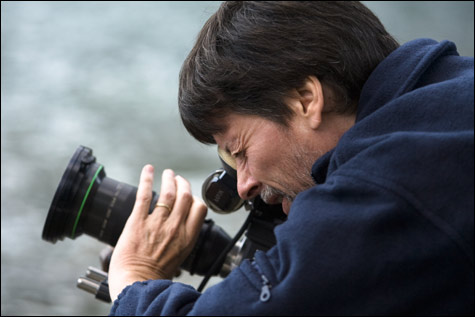
After watching The National Parks: America's Best Idea, it would be easy to conclude that it all could have been said a lot faster. Ken Burns disagrees — but he's not just being defensive. The crux of the argument lies in our divergent relationships to the film — creator's versus the critic's. Where the filmmaker sees the successful execution of an unconventional approach to telling a complex story, a critic projects himself into the response (and attention span) of a casual viewer, and thereby judges anything on TV by the standards of convention. I quizzed Burns about his pacing, storytelling, techniques, and goals during a pre-broadcast promotional visit to WGBH, and got a lesson in non-traditional documentary filmmaking. It's a long film. What message do you want people to take away from it?
For us, intention is to tell a good story. At the same time, we know very well that art has the possibility to galvanize action, and we would hope that it would just very simply drive people to the parks. About three years after the Civil War series, I was walking across the lawn of the visitors center at Gettysburg with the superintendent, and he stooped over and picked up a popsicle wrapper and waved it in my face. He said, "It's all your fault!" His attendance had gone up 200 to 300 percent and stayed there. We want every superintendent "angry" at us. When you did The War, you had people on your case saying you have to cover Native-Americans . . . you have to include whatever. Was that a factor here, in terms of including certain parks or states?
In no way do we feel obligated in any film. What we were trying to do was tell the story of an idea which begins with spectacular natural scenery, evolves into saving archaeological sites, and then goes in to land carved out of private land — Acadia — into complicated habitats like the Everglades, transforming into saving historical sites like the battlefields of the Civil War, and then finally not only ecological and environmental places but also places of shame — Manzanar, where Japanese American were interned, as is Shanksville Pennsylvania where United flight 93 went down.
Read more | 



No comments:
Post a Comment